Zhili Governor-General's Office
⭐ 4.20
Lianchi District, Baoding, Hebei, China
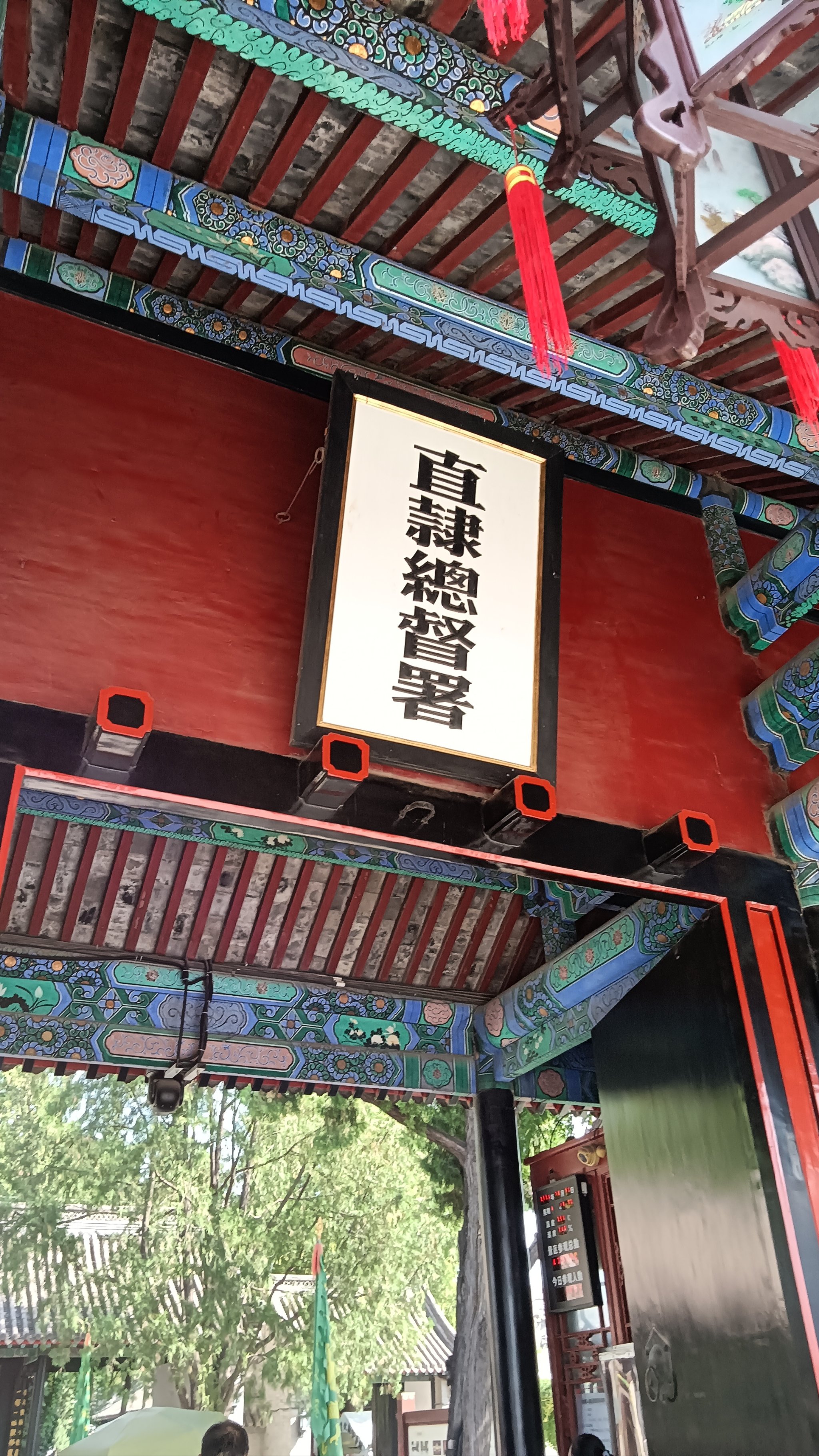 Built in 1730 during the reign of Emperor Yongzheng, the Zhili Governor-General's Office held singular political weight: the Zhili ("directly governed") province guarded Beijing, making its chief administrator one of the empire's most powerful figures—akin to a viceroy or prime minister in European courts. Over nearly two centuries, the compound witnessed seismic shifts in Chinese history. Zeng Guofan, the Confucian general who crushed the Taiping Rebellion, reorganized his armies here; Li Hongzhang launched pivotal Self-Strengthening Movement reforms from these very halls; and Yuan Shakai plotted the twilight of imperial China before founding the Republic. The site stands as an unparalleled physical archive of late-Qing governance.
Architecturally, the complex follows the strict symmetrical principles of Qing official buildings, spanning roughly 30,000 square meters along a south-facing central axis. Five sequential courtyards—the Gate, Ceremonial Gate, Grand Hall, Second Hall, and Governor's Residence—unfold in choreographed hierarchy, flanked by side chambers arranged according to the "civil east, military west" tradition. The Grand Hall still bears Emperor Yongzheng's personally brushed plaque reading "Ke Gong Shou Mu" (Diligent Shepherd of the Capital). Grey brick walls, tiled roofs, and carved beamwork exemplify the restrained yet authoritative aesthetic of imperial officialdom, comparable in gravitas to Britain's Whitehall or the chanceries of pre-revolutionary Paris.
Designated a National Key Cultural Relics Protection Unit and a third-tier national museum, the office preserves rare artifacts including the celebrated "Imperial Cotton Diagram," a 1765 painting illustrating sericulture and cotton cultivation. Permanent exhibitions systematically illuminate the governor-general's administrative scope, ceremonial protocols, and Qing anti-corruption culture. The compound remains an essential resource for understanding how China navigated its agonizing transition from empire to modern state.
Located at 301 Yuhua West Road in Baoding's Lianchi District, the site is remarkably visitor-friendly. From April 15 to October 15, gates open 8:30–18:00; winter hours run 9:00–17:00. The office closes every Monday. Admission runs 30–35 yuan, with discounts for students and seniors presenting ID. Plan two to three hours for a satisfying visit—and pair it with the adjacent Ancient Lotus Garden, a former imperial pleasure ground, for a complete "office plus garden" cultural itinerary that few Chinese cities can match.
Touring tips enhance the experience. Follow the central axis south to north to maintain the building's intended narrative flow. Don't miss the Grand Hall's imperial plaque and ritual recreations, the Second Hall's council-chamber displays, and the tranquil rear garden. Free QR-code audio guides and on-site human docents are available; requesting a guide unlocks far richer historical context. Plain, neutral clothing photographs beautifully against the muted brickwork. Comfortable non-slip shoes are essential—door thresholds and stone steps are numerous and often uneven. Visitors should observe standard museum etiquette: no smoking, no touching artifacts, and no flash photography near delicate displays.
Built in 1730 during the reign of Emperor Yongzheng, the Zhili Governor-General's Office held singular political weight: the Zhili ("directly governed") province guarded Beijing, making its chief administrator one of the empire's most powerful figures—akin to a viceroy or prime minister in European courts. Over nearly two centuries, the compound witnessed seismic shifts in Chinese history. Zeng Guofan, the Confucian general who crushed the Taiping Rebellion, reorganized his armies here; Li Hongzhang launched pivotal Self-Strengthening Movement reforms from these very halls; and Yuan Shakai plotted the twilight of imperial China before founding the Republic. The site stands as an unparalleled physical archive of late-Qing governance.
Architecturally, the complex follows the strict symmetrical principles of Qing official buildings, spanning roughly 30,000 square meters along a south-facing central axis. Five sequential courtyards—the Gate, Ceremonial Gate, Grand Hall, Second Hall, and Governor's Residence—unfold in choreographed hierarchy, flanked by side chambers arranged according to the "civil east, military west" tradition. The Grand Hall still bears Emperor Yongzheng's personally brushed plaque reading "Ke Gong Shou Mu" (Diligent Shepherd of the Capital). Grey brick walls, tiled roofs, and carved beamwork exemplify the restrained yet authoritative aesthetic of imperial officialdom, comparable in gravitas to Britain's Whitehall or the chanceries of pre-revolutionary Paris.
Designated a National Key Cultural Relics Protection Unit and a third-tier national museum, the office preserves rare artifacts including the celebrated "Imperial Cotton Diagram," a 1765 painting illustrating sericulture and cotton cultivation. Permanent exhibitions systematically illuminate the governor-general's administrative scope, ceremonial protocols, and Qing anti-corruption culture. The compound remains an essential resource for understanding how China navigated its agonizing transition from empire to modern state.
Located at 301 Yuhua West Road in Baoding's Lianchi District, the site is remarkably visitor-friendly. From April 15 to October 15, gates open 8:30–18:00; winter hours run 9:00–17:00. The office closes every Monday. Admission runs 30–35 yuan, with discounts for students and seniors presenting ID. Plan two to three hours for a satisfying visit—and pair it with the adjacent Ancient Lotus Garden, a former imperial pleasure ground, for a complete "office plus garden" cultural itinerary that few Chinese cities can match.
Touring tips enhance the experience. Follow the central axis south to north to maintain the building's intended narrative flow. Don't miss the Grand Hall's imperial plaque and ritual recreations, the Second Hall's council-chamber displays, and the tranquil rear garden. Free QR-code audio guides and on-site human docents are available; requesting a guide unlocks far richer historical context. Plain, neutral clothing photographs beautifully against the muted brickwork. Comfortable non-slip shoes are essential—door thresholds and stone steps are numerous and often uneven. Visitors should observe standard museum etiquette: no smoking, no touching artifacts, and no flash photography near delicate displays.