Yiyang Ancient Prefecture Site
⭐ 3.50
South Side of Lugang Grand Market, Lugang Community, Lugang Street, Yijiang District, Wuhu City, Anhui Province, China
 **Historical Context**
Established in the early Western Han dynasty (around 200 BCE), Yiyang Prefecture served as the political and military command center for northeastern Jiangxi for centuries. To put this in a Western frame, the site was founded roughly when Rome was finishing its conquest of the Mediterranean. While European provincial capitals such as Roman Lyon or Celtic Avignon rose and fell, Yiyang's administrative seat persisted through every Chinese dynasty until modern times, making it one of the most remarkably continuous seats of local government on the Eurasian continent. This unbroken lineage offers rare insight into two thousand years of Chinese bureaucratic continuity.
**Architecture and Archaeology**
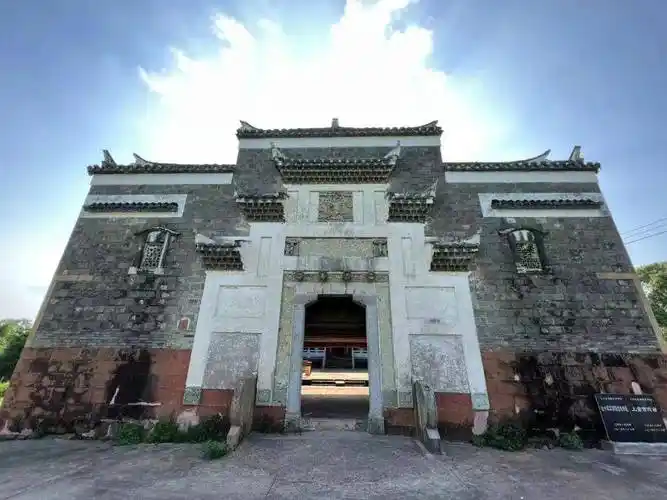
Like many long-inhabited sites in southern China, surface architecture has largely vanished beneath successive rebuildings, leaving an authentic open-air archaeological landscape rather than a reconstructed monument. Visitors can trace the Han-era rammed-earth city walls, examine ancient wells, and study stone artifacts dating from the Song dynasty onward. The most evocative finds include Western Han bricks stamped with the characters "Yiyang" (弋阳), Jin-dynasty dated epitaphs, Tang celadon shards, and Song bronze mirrors—objects as evocative of their age as Pompeii's graffiti or a Roman mile marker.
**Cultural Significance**
Yiyang sits at the historic meeting point of Wu and Chu cultural zones, a crossroads analogous to Burgundy on the French-German linguistic frontier. This hybrid identity nurtured the famous local gazetteer tradition led by the Southern Song minister and scholar Xie Dieshan (谢叠山). Even more influential, the site gave its name to Yiyangqiang (弋阳腔), one of the high-pitched vocal styles that shaped Chinese opera—comparable in importance to the development of opera in Renaissance Florence. Together with the dramatic cliff carvings of nearby Guifeng, the area forms a complete "seat-of-power plus landscape" heritage ensemble.
**Practical Visit Information**
The ruin field itself is open-air and free to enter, though visitors should contact the Yiyang County Cultural Relics Bureau in advance to check current protection status. The neighboring Guifeng (Turtle Peak) Danxia Scenic Area, part of a UNESCO World Natural Heritage listing, charges around 60 yuan. The Yiyang County Museum is free but requires booking one day ahead. Plan at least two hours to walk the historic paths tracing the old walls and artifact sites.
**Why Visit**
Few travelers venture into this corner of Jiangxi, which is precisely the appeal—here you can wander an unrestored ancient prefecture in near solitude, then climb crimson cliffs as the sun sets over the river valley. Beyond the history, the local cuisine rewards curious palates: try the peppery Yiyang fried rice cakes and river fish dishes in the old town, then overnight at a family guesthouse beneath Guifeng's dramatic silhouette for a profoundly Chinese, yet distinctly off-the-map, experience.
**Historical Context**
Established in the early Western Han dynasty (around 200 BCE), Yiyang Prefecture served as the political and military command center for northeastern Jiangxi for centuries. To put this in a Western frame, the site was founded roughly when Rome was finishing its conquest of the Mediterranean. While European provincial capitals such as Roman Lyon or Celtic Avignon rose and fell, Yiyang's administrative seat persisted through every Chinese dynasty until modern times, making it one of the most remarkably continuous seats of local government on the Eurasian continent. This unbroken lineage offers rare insight into two thousand years of Chinese bureaucratic continuity.
**Architecture and Archaeology**
Like many long-inhabited sites in southern China, surface architecture has largely vanished beneath successive rebuildings, leaving an authentic open-air archaeological landscape rather than a reconstructed monument. Visitors can trace the Han-era rammed-earth city walls, examine ancient wells, and study stone artifacts dating from the Song dynasty onward. The most evocative finds include Western Han bricks stamped with the characters "Yiyang" (弋阳), Jin-dynasty dated epitaphs, Tang celadon shards, and Song bronze mirrors—objects as evocative of their age as Pompeii's graffiti or a Roman mile marker.
**Cultural Significance**
Yiyang sits at the historic meeting point of Wu and Chu cultural zones, a crossroads analogous to Burgundy on the French-German linguistic frontier. This hybrid identity nurtured the famous local gazetteer tradition led by the Southern Song minister and scholar Xie Dieshan (谢叠山). Even more influential, the site gave its name to Yiyangqiang (弋阳腔), one of the high-pitched vocal styles that shaped Chinese opera—comparable in importance to the development of opera in Renaissance Florence. Together with the dramatic cliff carvings of nearby Guifeng, the area forms a complete "seat-of-power plus landscape" heritage ensemble.
**Practical Visit Information**
The ruin field itself is open-air and free to enter, though visitors should contact the Yiyang County Cultural Relics Bureau in advance to check current protection status. The neighboring Guifeng (Turtle Peak) Danxia Scenic Area, part of a UNESCO World Natural Heritage listing, charges around 60 yuan. The Yiyang County Museum is free but requires booking one day ahead. Plan at least two hours to walk the historic paths tracing the old walls and artifact sites.
**Why Visit**
Few travelers venture into this corner of Jiangxi, which is precisely the appeal—here you can wander an unrestored ancient prefecture in near solitude, then climb crimson cliffs as the sun sets over the river valley. Beyond the history, the local cuisine rewards curious palates: try the peppery Yiyang fried rice cakes and river fish dishes in the old town, then overnight at a family guesthouse beneath Guifeng's dramatic silhouette for a profoundly Chinese, yet distinctly off-the-map, experience.