Wuhu Old Street
⭐ 3.80
South side of Lugang Market, Lugang Community, Zheshan Subdistrict, Jinghu District, Wuhu City, Anhui Province, China
 **Historical Background**
Wuhu's walled town traces its origins to the Three Kingdoms era (220–280 AD), when it served as a minor riverside outpost roughly contemporary with Rome's later decline. The grid of lanes visitors see today, however, took shape under the Tang and Song dynasties and was finalized during the Ming and Qing periods, much like how many European medieval town plans were refined during the Renaissance rather than their original founding centuries. Designated a National Tourism and Leisure Street in 2023, the district preserves more than fifty historic structures, including former government offices and a Confucian temple, making it a tangible record of how a Yangtze trading port evolved into a modern industrial city.
**Architecture**
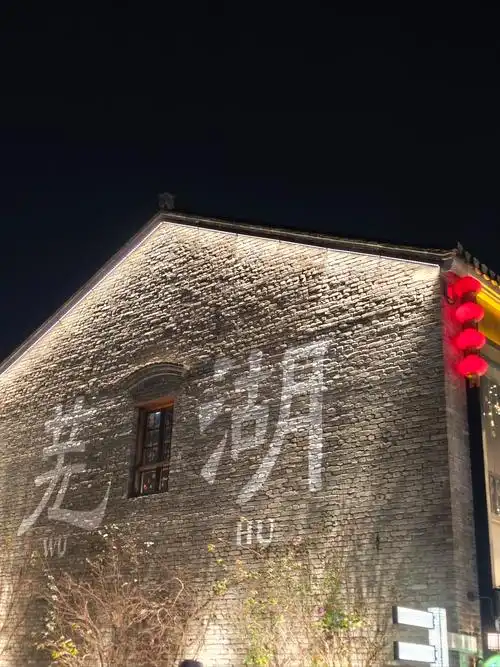
The visual signature is classic Huizhou style—grey brick walls, dark clay tiles, and distinctive horse-head gables that step rhythmically along the rooflines, a regional answer to the stepped gables of Amsterdam's canal houses or the crow-stepped walls of Scottish burghs. South Zheng Street runs broad and orderly, while branch lanes such as Flower Street and Confucian Scholars Street retain their original narrow, intimate proportions, paved in local blue-grey stone. Two surviving city gates, Laifeng and Changhong, frame the district, and after dark, red lanterns and projected lighting transform the alleys into a stage set reminiscent of a lantern-lit European Christmas market.
**Cultural Significance**
Each lane name carries a story: Flower Street still hosts bamboo weavers and seasonal lantern festivals, Confucian Scholars Street remembers the imperial examination culture that once flourished here, and Copper-Beating Alley preserves traces of traditional metalwork. Visitors can catch intangible-heritage performances such as the Wuwei Fish Lantern dance and sample time-tested local flavors, notably the shrimp-roe noodles at the century-old Gengfuxing restaurant. The combination of merchant heritage, scholarly memory, and everyday street life offers an unusually layered introduction to Anhui's port-town culture.
**Practical Visit Information**
Outdoor lanes are free and open daily. Inside the yamen, Confucian temple, and select mansions, a combo ticket runs about 50 yuan. The district sits centrally in Jinghu District; the easiest access is Light Rail Line 1 to Huancheng North Road Station, or a taxi directly to "Wuhu Old Town." Summers are hot and humid—bring water, insect repellent, and sturdy anti-slip footwear, since the stone paving becomes slick in rain.
**Why Visit**
The recommended window is late afternoon to around 9 pm, when golden-hour light gives way to the night illumination show. Enter through the South Gate, drift down South Zheng Street into Flower Street and Confucian Scholars Street, then tour the yamen and Confucian temple before climbing Changhong Gate for a sweeping view of the Yangtze at sunset. Allow half a day; the lanes are photogenic throughout and especially popular with visitors wearing hanfu for atmospheric portraits.
**Historical Background**
Wuhu's walled town traces its origins to the Three Kingdoms era (220–280 AD), when it served as a minor riverside outpost roughly contemporary with Rome's later decline. The grid of lanes visitors see today, however, took shape under the Tang and Song dynasties and was finalized during the Ming and Qing periods, much like how many European medieval town plans were refined during the Renaissance rather than their original founding centuries. Designated a National Tourism and Leisure Street in 2023, the district preserves more than fifty historic structures, including former government offices and a Confucian temple, making it a tangible record of how a Yangtze trading port evolved into a modern industrial city.
**Architecture**
The visual signature is classic Huizhou style—grey brick walls, dark clay tiles, and distinctive horse-head gables that step rhythmically along the rooflines, a regional answer to the stepped gables of Amsterdam's canal houses or the crow-stepped walls of Scottish burghs. South Zheng Street runs broad and orderly, while branch lanes such as Flower Street and Confucian Scholars Street retain their original narrow, intimate proportions, paved in local blue-grey stone. Two surviving city gates, Laifeng and Changhong, frame the district, and after dark, red lanterns and projected lighting transform the alleys into a stage set reminiscent of a lantern-lit European Christmas market.
**Cultural Significance**
Each lane name carries a story: Flower Street still hosts bamboo weavers and seasonal lantern festivals, Confucian Scholars Street remembers the imperial examination culture that once flourished here, and Copper-Beating Alley preserves traces of traditional metalwork. Visitors can catch intangible-heritage performances such as the Wuwei Fish Lantern dance and sample time-tested local flavors, notably the shrimp-roe noodles at the century-old Gengfuxing restaurant. The combination of merchant heritage, scholarly memory, and everyday street life offers an unusually layered introduction to Anhui's port-town culture.
**Practical Visit Information**
Outdoor lanes are free and open daily. Inside the yamen, Confucian temple, and select mansions, a combo ticket runs about 50 yuan. The district sits centrally in Jinghu District; the easiest access is Light Rail Line 1 to Huancheng North Road Station, or a taxi directly to "Wuhu Old Town." Summers are hot and humid—bring water, insect repellent, and sturdy anti-slip footwear, since the stone paving becomes slick in rain.
**Why Visit**
The recommended window is late afternoon to around 9 pm, when golden-hour light gives way to the night illumination show. Enter through the South Gate, drift down South Zheng Street into Flower Street and Confucian Scholars Street, then tour the yamen and Confucian temple before climbing Changhong Gate for a sweeping view of the Yangtze at sunset. Allow half a day; the lanes are photogenic throughout and especially popular with visitors wearing hanfu for atmospheric portraits.