Zhangqiu Longshan
⭐ 3.80
Panlong Mountain Scenic Area, Zhangqiu District, Jinan City, Shandong Province, China
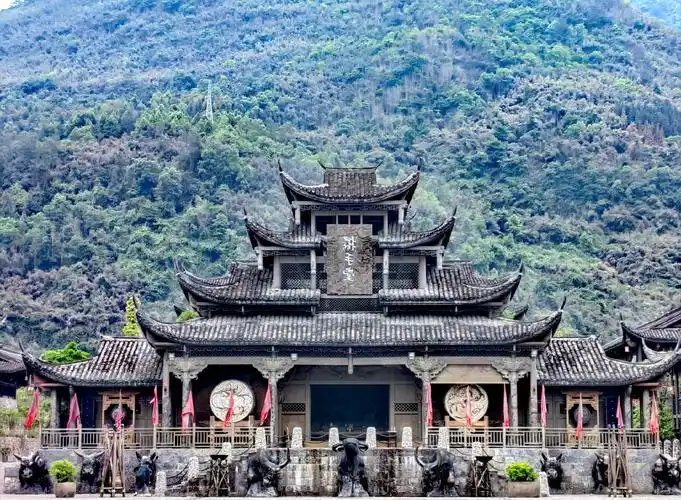 **A Cradle of Chinese Civilization**
The Chengziya site, first excavated in 1928 and formally named two years later, holds a unique place in world archaeology as the first prehistoric site independently discovered by Chinese scholars. Its identification of a distinctive black pottery culture—comparable in importance to Schliemann's uncovering of Troy or the recognition of the Minoan civilization on Crete—established "Longshan Culture," which ranks alongside Liangzhu and Shijiahe as one of the three great prehistoric civilizations of East Asia. The nearby Xihe site, dating back roughly 9,000 years, parallels early Neolithic settlements like Çatalhöyük in Turkey, while the Jiaoji site captures the critical transition from Dawenkou to Longshan culture, tracing the full arc of early Chinese societal complexity.
**Architecture and Stacked Time**
The defining spectacle at Chengziya is its stratigraphic masterpiece: the rammed-earth city walls of the Longshan, Yueshi, and Zhou dynasties pressed one atop another like geological sediments. A glass curtain wall now reveals these layers in cross-section, allowing visitors to read millennia of urban history at a glance—much like the exposed Roman walls beneath London's Bloomberg arcade or the medieval foundations visible beneath European cathedrals. The on-site museum safeguards treasures including an eggshell black pottery goblet whose walls measure a mere 0.1 to 0.2 millimeters thick, embodying the ancient aesthetic ideal of "black as lacquer, thin as paper, clear as a chime"—a technical feat rivaling the Roman Portland Vase.
**Cultural Significance**
Longshan Culture occupies a central position in China's ongoing "Exploration of the Origins of Chinese Civilization" project, representing the sophisticated copper-and-stone societies that flourished across East Asia in the third millennium BCE. Beyond its scholarly importance, the region honors its living heritage through intangible cultural workshops where visitors can throw pots and incise traditional patterns by hand—transforming distant artifacts into tactile, personal experiences. Seasonal events such as the spring rapeseed flower fields and the autumn tribute-rice harvest festival further animate this ancient landscape.
**Practical Visitor Information**
The Chengziya Museum is free to enter and open Tuesday through Sunday, 9:00 a.m. to 5:00 p.m., with last admission at 4:00 p.m.; bring a passport or ID card for registration. The archaeological park itself stays open until 4:30 p.m. Black pottery making sessions require advance booking. The site lies approximately 15 kilometers from Jinan Yaoqiang International Airport and is best reached by car or ride-hailing service. Local dining specialties include Longshan millet porridge and fresh water tofu.
**Suggested Itinerary and Tips**
Allow half a day to a full day for a comfortable visit. A recommended combination pairs the Chengziya Museum, the Han Dynasty Pingling ancient city walls, and a black pottery workshop. In summer, visit the museum in the morning and reserve pottery-making or countryside walks for the cooler afternoon. April–May brings spectacular flower fields, while September–October features the lively harvest festival. Families with children should seek out the summer "Prehistoric Workshop" archaeology camp. Those wishing to extend their trip can easily combine the visit with the historic Zhujiayu Village or the wetlands of Baiyun Lake for a fuller Jinan-area experience.
**Why Visit**
Zhangqiu Longshan offers something rare: the chance to stand where modern Chinese archaeology was born, to witness nine millennia of human progress layered into a single hillside, and to leave with a handmade object shaped by your own fingers in the tradition of a vanished civilization. It is a destination where deep history meets warm hospitality.
**A Cradle of Chinese Civilization**
The Chengziya site, first excavated in 1928 and formally named two years later, holds a unique place in world archaeology as the first prehistoric site independently discovered by Chinese scholars. Its identification of a distinctive black pottery culture—comparable in importance to Schliemann's uncovering of Troy or the recognition of the Minoan civilization on Crete—established "Longshan Culture," which ranks alongside Liangzhu and Shijiahe as one of the three great prehistoric civilizations of East Asia. The nearby Xihe site, dating back roughly 9,000 years, parallels early Neolithic settlements like Çatalhöyük in Turkey, while the Jiaoji site captures the critical transition from Dawenkou to Longshan culture, tracing the full arc of early Chinese societal complexity.
**Architecture and Stacked Time**
The defining spectacle at Chengziya is its stratigraphic masterpiece: the rammed-earth city walls of the Longshan, Yueshi, and Zhou dynasties pressed one atop another like geological sediments. A glass curtain wall now reveals these layers in cross-section, allowing visitors to read millennia of urban history at a glance—much like the exposed Roman walls beneath London's Bloomberg arcade or the medieval foundations visible beneath European cathedrals. The on-site museum safeguards treasures including an eggshell black pottery goblet whose walls measure a mere 0.1 to 0.2 millimeters thick, embodying the ancient aesthetic ideal of "black as lacquer, thin as paper, clear as a chime"—a technical feat rivaling the Roman Portland Vase.
**Cultural Significance**
Longshan Culture occupies a central position in China's ongoing "Exploration of the Origins of Chinese Civilization" project, representing the sophisticated copper-and-stone societies that flourished across East Asia in the third millennium BCE. Beyond its scholarly importance, the region honors its living heritage through intangible cultural workshops where visitors can throw pots and incise traditional patterns by hand—transforming distant artifacts into tactile, personal experiences. Seasonal events such as the spring rapeseed flower fields and the autumn tribute-rice harvest festival further animate this ancient landscape.
**Practical Visitor Information**
The Chengziya Museum is free to enter and open Tuesday through Sunday, 9:00 a.m. to 5:00 p.m., with last admission at 4:00 p.m.; bring a passport or ID card for registration. The archaeological park itself stays open until 4:30 p.m. Black pottery making sessions require advance booking. The site lies approximately 15 kilometers from Jinan Yaoqiang International Airport and is best reached by car or ride-hailing service. Local dining specialties include Longshan millet porridge and fresh water tofu.
**Suggested Itinerary and Tips**
Allow half a day to a full day for a comfortable visit. A recommended combination pairs the Chengziya Museum, the Han Dynasty Pingling ancient city walls, and a black pottery workshop. In summer, visit the museum in the morning and reserve pottery-making or countryside walks for the cooler afternoon. April–May brings spectacular flower fields, while September–October features the lively harvest festival. Families with children should seek out the summer "Prehistoric Workshop" archaeology camp. Those wishing to extend their trip can easily combine the visit with the historic Zhujiayu Village or the wetlands of Baiyun Lake for a fuller Jinan-area experience.
**Why Visit**
Zhangqiu Longshan offers something rare: the chance to stand where modern Chinese archaeology was born, to witness nine millennia of human progress layered into a single hillside, and to leave with a handmade object shaped by your own fingers in the tradition of a vanished civilization. It is a destination where deep history meets warm hospitality.