Wuhu Museum
⭐ 4.20
Jiujiang District, Wuhu, Anhui, China
 Spanning from the 2.2-million-year-old Fanchang Renzi Cave Paleolithic site to the bustling treaty ports of the late Qing dynasty, Wuhu Museum traces the evolution of the Yangtze-Huai river civilization. Its narrative unfolds in six chronological galleries, comparable in ambition to the regional wings of London's British Museum or the National Museum of China in Beijing. Highlights include Bronze Age ritual vessels that echo the artistry of contemporary Shang bronzes, Han and Three Kingdoms tomb wares, and exquisite Song dynasty bluish-white porcelain from the Fanchang kilns—a celebrated southern counterpart to the renowned Jingdezhen traditions.
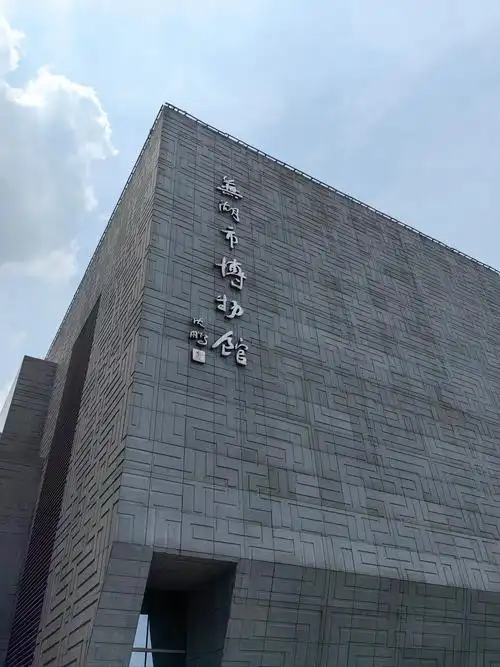
The 22,000-square-meter building rises three stories with nearly 8,000 square meters of exhibition space. Its clean, contemporary lines and generous skylights recall the minimalist clarity of Renzo Piano's modern museum architecture, while a surrounding green lawn integrates the structure into the urban landscape. Inside, the logical circulation route balances artifact preservation with visitor comfort, and a central atrium creates a calm, contemplative atmosphere suitable for serious cultural exploration.
Ten Grade-One national treasures anchor the collection, chief among them a Western Han bronze fang vessel with intertwined serpent motifs, a Three Kingdoms celadon ram-shaped wine vessel, and a Tang dynasty bronze mirror engraved with four phoenixes bearing silk ribbons. These pieces offer the same kind of intimate encounter with antiquity that visitors expect at the Shanghai Museum's bronze gallery.
The museum's signature cultural symbol is Wuhu Iron Pictures (芜湖铁画), a national intangible heritage art form that welds and hammers iron into calligraphic strokes and landscape compositions. Think of it as the eastern equivalent of wrought-iron craftsmanship found in Spanish and Flemish traditions, but here reimagined as free-standing painting. A 1:1 recreation of a late-Qing "Ten-Li Long Street" with wooden shop doors, bluestone paving, and faded trade banners provides an evocative time-capsule experience reminiscent of open-air heritage districts in Lijiang or Pingyao.
Practical information for visitors: the museum sits at 60 Renhe Road in the Chengdong New District, adjacent to Central Park. It is open Tuesday through Sunday from 9:00 a.m. to 5:00 p.m. (last entry at 4:30 p.m.) and closed on Mondays except during national holidays. Admission is free, though visitors should bring a passport or ID card and ideally reserve tickets in advance through the official WeChat account or website. Bus routes 4, 15, 42, and 45 stop nearby at the "City Museum" station. Plan two to three hours for a thorough visit, arriving before noon or after 2 p.m. to avoid the midday rush, and check official channels for current temporary exhibitions such as the popular summer paleontology displays.
Why visit Wuhu Museum? It delivers a richly layered cultural experience without the crowds of China's flagship institutions, combining prehistoric archaeology, imperial craftsmanship, and living folk tradition in one accessible, well-designed venue—an excellent addition to any Yangtze River itinerary and a rewarding detour for curious travelers exploring Anhui Province beyond the黄山 hiking trails.
Spanning from the 2.2-million-year-old Fanchang Renzi Cave Paleolithic site to the bustling treaty ports of the late Qing dynasty, Wuhu Museum traces the evolution of the Yangtze-Huai river civilization. Its narrative unfolds in six chronological galleries, comparable in ambition to the regional wings of London's British Museum or the National Museum of China in Beijing. Highlights include Bronze Age ritual vessels that echo the artistry of contemporary Shang bronzes, Han and Three Kingdoms tomb wares, and exquisite Song dynasty bluish-white porcelain from the Fanchang kilns—a celebrated southern counterpart to the renowned Jingdezhen traditions.
The 22,000-square-meter building rises three stories with nearly 8,000 square meters of exhibition space. Its clean, contemporary lines and generous skylights recall the minimalist clarity of Renzo Piano's modern museum architecture, while a surrounding green lawn integrates the structure into the urban landscape. Inside, the logical circulation route balances artifact preservation with visitor comfort, and a central atrium creates a calm, contemplative atmosphere suitable for serious cultural exploration.
Ten Grade-One national treasures anchor the collection, chief among them a Western Han bronze fang vessel with intertwined serpent motifs, a Three Kingdoms celadon ram-shaped wine vessel, and a Tang dynasty bronze mirror engraved with four phoenixes bearing silk ribbons. These pieces offer the same kind of intimate encounter with antiquity that visitors expect at the Shanghai Museum's bronze gallery.
The museum's signature cultural symbol is Wuhu Iron Pictures (芜湖铁画), a national intangible heritage art form that welds and hammers iron into calligraphic strokes and landscape compositions. Think of it as the eastern equivalent of wrought-iron craftsmanship found in Spanish and Flemish traditions, but here reimagined as free-standing painting. A 1:1 recreation of a late-Qing "Ten-Li Long Street" with wooden shop doors, bluestone paving, and faded trade banners provides an evocative time-capsule experience reminiscent of open-air heritage districts in Lijiang or Pingyao.
Practical information for visitors: the museum sits at 60 Renhe Road in the Chengdong New District, adjacent to Central Park. It is open Tuesday through Sunday from 9:00 a.m. to 5:00 p.m. (last entry at 4:30 p.m.) and closed on Mondays except during national holidays. Admission is free, though visitors should bring a passport or ID card and ideally reserve tickets in advance through the official WeChat account or website. Bus routes 4, 15, 42, and 45 stop nearby at the "City Museum" station. Plan two to three hours for a thorough visit, arriving before noon or after 2 p.m. to avoid the midday rush, and check official channels for current temporary exhibitions such as the popular summer paleontology displays.
Why visit Wuhu Museum? It delivers a richly layered cultural experience without the crowds of China's flagship institutions, combining prehistoric archaeology, imperial craftsmanship, and living folk tradition in one accessible, well-designed venue—an excellent addition to any Yangtze River itinerary and a rewarding detour for curious travelers exploring Anhui Province beyond the黄山 hiking trails.