Zheshan Park
⭐ 4.20
Zheshan Park, Jinghu District, Wuhu City, Anhui Province, China
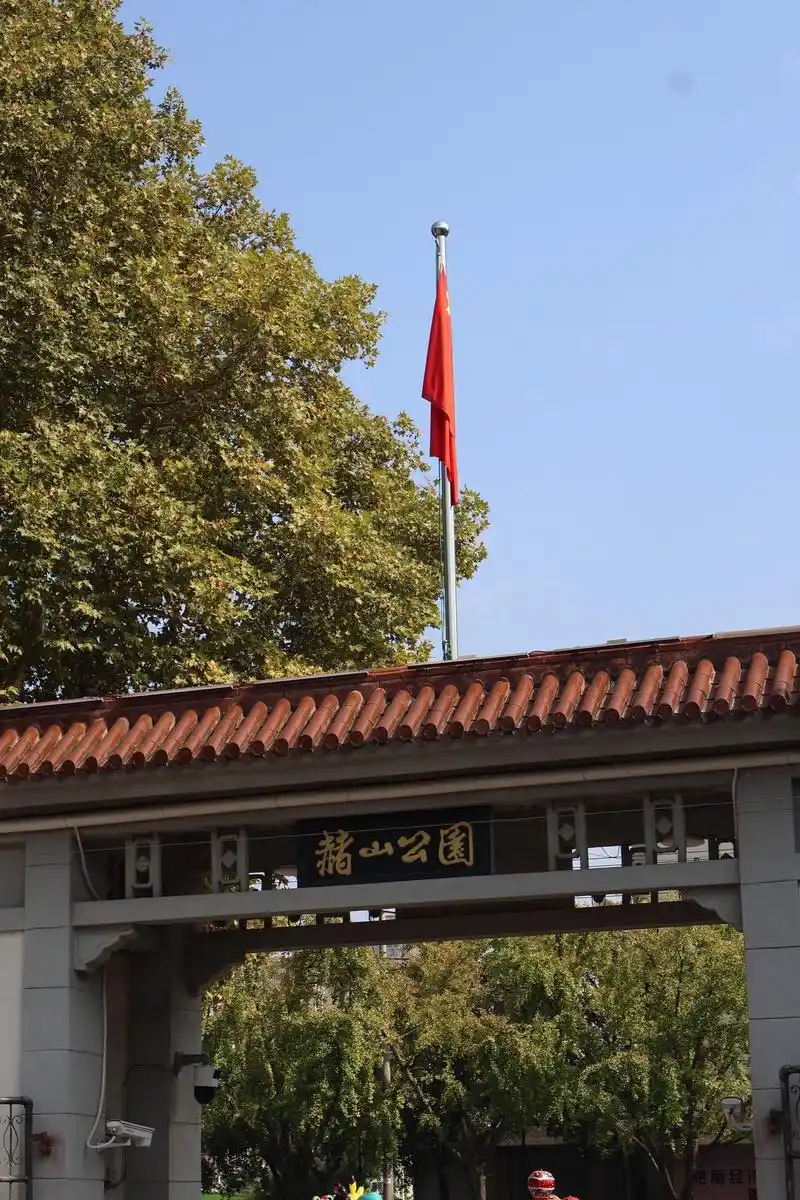 Zheshan Park, established in 1933, holds the distinction of being Anhui Province's first urban park, predating the People's Republic itself by sixteen years. It opened its gates to the public free of charge in 2004 and now welcomes visitors across roughly 48 hectares where more than 90% of the land is cloaked in greenery. The park crowns two modest peaks, Great Zheshan rising 84.8 meters and Little Zheshan below, both colored the deep russet that gave the site its poetic name. Comparable in ambition to Athens' Lycabettus Hill or Paris's Parc des Buttes-Chaumont, this green refuge offers an unexpected encounter with nature and centuries of Chinese history right in the heart of Wuhu.
The park's spiritual heart is Guangji Temple, locally nicknamed "Little Jiuhua" after one of China's four sacred Buddhist mountains. Founded during the Tang dynasty, the temple complex has welcomed worshippers for over a millennium, its halls fragrant with incense and its eaves echoing with chants that connect modern pilgrims to the era of Emperor Xuanzong's golden age. Nearby stands the five-story Zhe Pagoda, a stout Song-era brick tower dating to the Northern Song period. This unassuming yet atmospheric structure once inspired the famous "Wuhu Ten Scenes" painting series, where "Zhe Pagoda in Clear Mist" held pride of place. Climb its stairs for views that rival those from a Tuscan campanile, with the Yangtze unfurling like a silver ribbon below.
Beyond its religious heritage, Zheshan carries the weight of modern Chinese history. The Sun Yat-sen Memorial Hall, a dignified structure recalling the 1911 Xinhai Revolution that toppled the Qing dynasty and reshaped East Asia, sits serenely amid the trees. Nearby rests the tomb of General Dai Anlan, the celebrated Chinese commander who led forces against Imperial Japanese troops in Burma during World War II. His grave, much like the Commonwealth war cemeteries scattered across Burma, stands as a quiet testament to the sacrifices made by Chinese soldiers in the broader Allied struggle against fascism.
Wander into Cuiming Garden, a meticulously crafted Hui-style classical garden where whitewashed walls, gray-tiled roofs, and arched stone bridges over koi-filled ponds evoke the refined aesthetics of Suzhou's celebrated gardens. Hanfu-clad photographers frequently pose here, drawn by its painterly charm that recalls the gardens depicted in 18th-century Chinese export paintings favored by European collectors. This pocket of Ming-and-Qing-era elegance offers a contemplative counterpoint to the hilltop panoramas.
The park is open daily from roughly 4:30 AM to 10 PM, with gate-closing times varying by entrance. The most convenient access is via Wuhu Metro Line 1 to Zheshan Park Station at the east gate, while numerous bus routes serve multiple entrances. A small zoo within the grounds charges approximately 8-14 yuan, and certain children's rides require separate tickets. Plan for two to three hours for a standard visit, or half a day if you wish to summit the hill for sunset.
Arrive after 4 PM to make the most of the soft golden light. Begin in Cuiming Garden, then ascend to the Yilan Pavilion for a sweeping 270-degree panorama, ideally as dusk paints the Yangtze in amber. Descend past Guangji Temple and the Song-era Zhe Pagoda, then exit through the west gate directly onto Phoenix Food Street, where you can sample Wuhu's signature braised duck with crimson skin and the city's famed shrimp-roe noodles. Wear comfortable walking shoes and bring a light jacket, as breezes atop the pagoda can turn unexpectedly cool as the sun sets.
Zheshan Park, established in 1933, holds the distinction of being Anhui Province's first urban park, predating the People's Republic itself by sixteen years. It opened its gates to the public free of charge in 2004 and now welcomes visitors across roughly 48 hectares where more than 90% of the land is cloaked in greenery. The park crowns two modest peaks, Great Zheshan rising 84.8 meters and Little Zheshan below, both colored the deep russet that gave the site its poetic name. Comparable in ambition to Athens' Lycabettus Hill or Paris's Parc des Buttes-Chaumont, this green refuge offers an unexpected encounter with nature and centuries of Chinese history right in the heart of Wuhu.
The park's spiritual heart is Guangji Temple, locally nicknamed "Little Jiuhua" after one of China's four sacred Buddhist mountains. Founded during the Tang dynasty, the temple complex has welcomed worshippers for over a millennium, its halls fragrant with incense and its eaves echoing with chants that connect modern pilgrims to the era of Emperor Xuanzong's golden age. Nearby stands the five-story Zhe Pagoda, a stout Song-era brick tower dating to the Northern Song period. This unassuming yet atmospheric structure once inspired the famous "Wuhu Ten Scenes" painting series, where "Zhe Pagoda in Clear Mist" held pride of place. Climb its stairs for views that rival those from a Tuscan campanile, with the Yangtze unfurling like a silver ribbon below.
Beyond its religious heritage, Zheshan carries the weight of modern Chinese history. The Sun Yat-sen Memorial Hall, a dignified structure recalling the 1911 Xinhai Revolution that toppled the Qing dynasty and reshaped East Asia, sits serenely amid the trees. Nearby rests the tomb of General Dai Anlan, the celebrated Chinese commander who led forces against Imperial Japanese troops in Burma during World War II. His grave, much like the Commonwealth war cemeteries scattered across Burma, stands as a quiet testament to the sacrifices made by Chinese soldiers in the broader Allied struggle against fascism.
Wander into Cuiming Garden, a meticulously crafted Hui-style classical garden where whitewashed walls, gray-tiled roofs, and arched stone bridges over koi-filled ponds evoke the refined aesthetics of Suzhou's celebrated gardens. Hanfu-clad photographers frequently pose here, drawn by its painterly charm that recalls the gardens depicted in 18th-century Chinese export paintings favored by European collectors. This pocket of Ming-and-Qing-era elegance offers a contemplative counterpoint to the hilltop panoramas.
The park is open daily from roughly 4:30 AM to 10 PM, with gate-closing times varying by entrance. The most convenient access is via Wuhu Metro Line 1 to Zheshan Park Station at the east gate, while numerous bus routes serve multiple entrances. A small zoo within the grounds charges approximately 8-14 yuan, and certain children's rides require separate tickets. Plan for two to three hours for a standard visit, or half a day if you wish to summit the hill for sunset.
Arrive after 4 PM to make the most of the soft golden light. Begin in Cuiming Garden, then ascend to the Yilan Pavilion for a sweeping 270-degree panorama, ideally as dusk paints the Yangtze in amber. Descend past Guangji Temple and the Song-era Zhe Pagoda, then exit through the west gate directly onto Phoenix Food Street, where you can sample Wuhu's signature braised duck with crimson skin and the city's famed shrimp-roe noodles. Wear comfortable walking shoes and bring a light jacket, as breezes atop the pagoda can turn unexpectedly cool as the sun sets.