Jinghu Lake
⭐ 4.00
Jinghu Park, Jinghu District, Wuhu City, Anhui Province, China
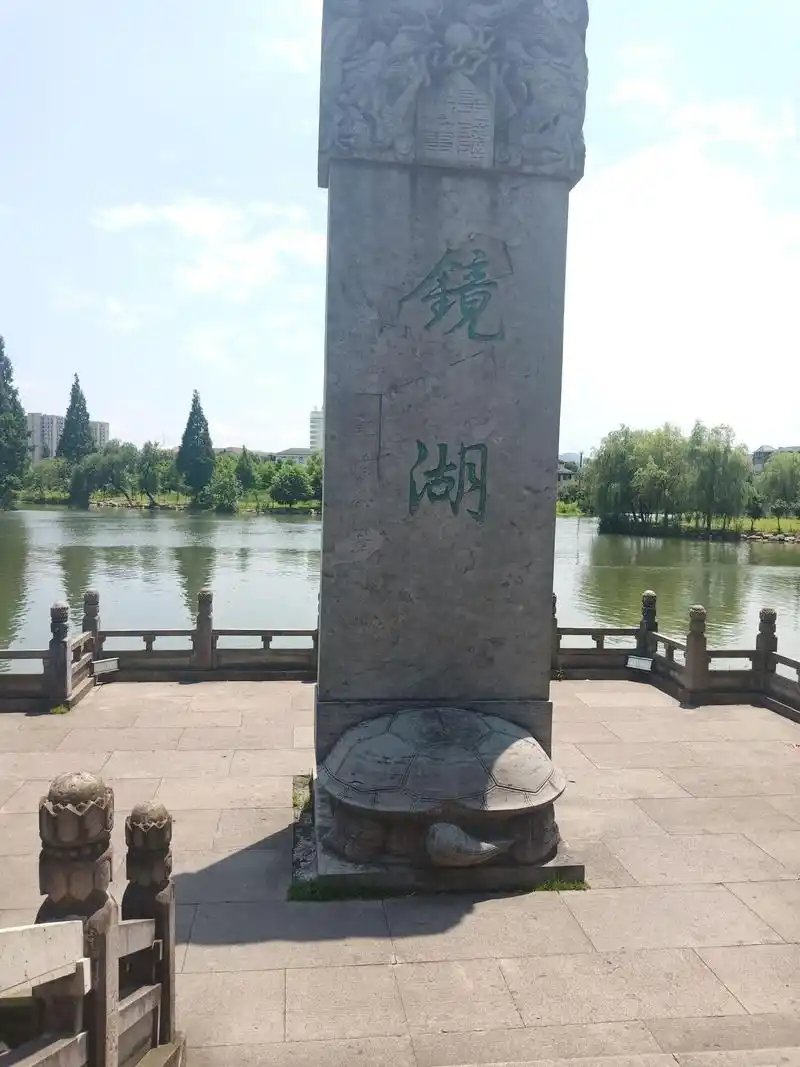 Mirror Lake was carved from farmland in 1161, the same year Henry II was consolidating power in England and Saladin was rising to prominence in the Near East. Its founder, the brilliant Zhang Xiaoxiang—poet, statesman, and zhuangyuan (top imperial examination laureate)—donated a hundred mu of his family's land so that his hometown might have a public pleasure ground. Originally called Taotang, the lake earned its poetic name because its broad, calm surface acted as a natural mirror for the surrounding cityscape. For eight centuries it has remained a favored subject of poets, and scholars still gather here to honor one of Wuhu's most illustrious sons.
The park combines two linked basins—Greater Mirror Lake (Taotang) and Lesser Mirror Lake (Wangjiatian)—covering more than 33 acres of water. Curving embankments planted with weeping willows give the place its celebrated "Mirror Lake Willows" character, a motif beloved in Jiangnan painting for centuries. Stone arch bridges and covered walkways span narrow channels between the two bodies of water, leading visitors to the little islet of Yanyu Dun, a misty mound that has inspired countless landscape scrolls. A statue of the late-Ming painter Xiao Yuncong and a memorial hall to Zhang Xiaoxiang anchor the cultural corners, while the modern "Mirror Lake Reading Room" offers quiet refuge with lake views.
Like the Jardin du Luxembourg in Paris or Hyde Park in London, Mirror Lake functions as both a civic showcase and a beloved public salon—except this "salon" predates both by several centuries and trades European formality for the gentler geometry of Jiangnan design. Its setting inspired Wuhu's literary traditions from the Song dynasty onward, and its name has come to symbolize the city itself: graceful, reflective, and quietly self-possessed. Water-quality upgrades completed in 2025 have refreshed the ecosystem, ensuring the lake's famous mirror-like clarity for generations to come.
The park is open around the clock, every day of the year, with no entrance fee—remarkably generous by Chinese heritage-site standards. A roughly 2.5-km lakeside path circles both basins and is flat and accessible for walkers, joggers, and parents with strollers. Pedal boats and small tour boats are available for hire during daylight hours, making it easy to view the willow-fringed shoreline from the water. The lake lies directly beside Zhongshan Pedestrian Street and Jiuzi Square, where you can find anything from quick street snacks to full sit-down restaurants. Parking in the central district is notoriously tight, so arriving by bus or taxi is strongly advised.
Evening is the magic hour: as the surrounding buildings light up, their reflections ripple across the dark water and the whole lake becomes a luminous "city in the mirror"—a scene that has made Mirror Lake a favorite of wedding photographers and travel bloggers alike. Spring and autumn bring the mildest weather and the clearest air, when willows are at their greenest and water most transparent. Summer visits are pleasant but bring mosquitoes at dusk and high humidity; winter reveals a stark, almost monochrome beauty. Combined with nearby sights such as Wuhu Old Town and the revitalized Old Shipyard creative district, Mirror Lake anchors an easy half-day or full-day walking itinerary through the city's layered past and present.
Mirror Lake was carved from farmland in 1161, the same year Henry II was consolidating power in England and Saladin was rising to prominence in the Near East. Its founder, the brilliant Zhang Xiaoxiang—poet, statesman, and zhuangyuan (top imperial examination laureate)—donated a hundred mu of his family's land so that his hometown might have a public pleasure ground. Originally called Taotang, the lake earned its poetic name because its broad, calm surface acted as a natural mirror for the surrounding cityscape. For eight centuries it has remained a favored subject of poets, and scholars still gather here to honor one of Wuhu's most illustrious sons.
The park combines two linked basins—Greater Mirror Lake (Taotang) and Lesser Mirror Lake (Wangjiatian)—covering more than 33 acres of water. Curving embankments planted with weeping willows give the place its celebrated "Mirror Lake Willows" character, a motif beloved in Jiangnan painting for centuries. Stone arch bridges and covered walkways span narrow channels between the two bodies of water, leading visitors to the little islet of Yanyu Dun, a misty mound that has inspired countless landscape scrolls. A statue of the late-Ming painter Xiao Yuncong and a memorial hall to Zhang Xiaoxiang anchor the cultural corners, while the modern "Mirror Lake Reading Room" offers quiet refuge with lake views.
Like the Jardin du Luxembourg in Paris or Hyde Park in London, Mirror Lake functions as both a civic showcase and a beloved public salon—except this "salon" predates both by several centuries and trades European formality for the gentler geometry of Jiangnan design. Its setting inspired Wuhu's literary traditions from the Song dynasty onward, and its name has come to symbolize the city itself: graceful, reflective, and quietly self-possessed. Water-quality upgrades completed in 2025 have refreshed the ecosystem, ensuring the lake's famous mirror-like clarity for generations to come.
The park is open around the clock, every day of the year, with no entrance fee—remarkably generous by Chinese heritage-site standards. A roughly 2.5-km lakeside path circles both basins and is flat and accessible for walkers, joggers, and parents with strollers. Pedal boats and small tour boats are available for hire during daylight hours, making it easy to view the willow-fringed shoreline from the water. The lake lies directly beside Zhongshan Pedestrian Street and Jiuzi Square, where you can find anything from quick street snacks to full sit-down restaurants. Parking in the central district is notoriously tight, so arriving by bus or taxi is strongly advised.
Evening is the magic hour: as the surrounding buildings light up, their reflections ripple across the dark water and the whole lake becomes a luminous "city in the mirror"—a scene that has made Mirror Lake a favorite of wedding photographers and travel bloggers alike. Spring and autumn bring the mildest weather and the clearest air, when willows are at their greenest and water most transparent. Summer visits are pleasant but bring mosquitoes at dusk and high humidity; winter reveals a stark, almost monochrome beauty. Combined with nearby sights such as Wuhu Old Town and the revitalized Old Shipyard creative district, Mirror Lake anchors an easy half-day or full-day walking itinerary through the city's layered past and present.