Liaocheng China Water City
⭐ 3.80
Liaocheng China Water City, Dongchangfu District, Liaocheng City, Shandong Province, China
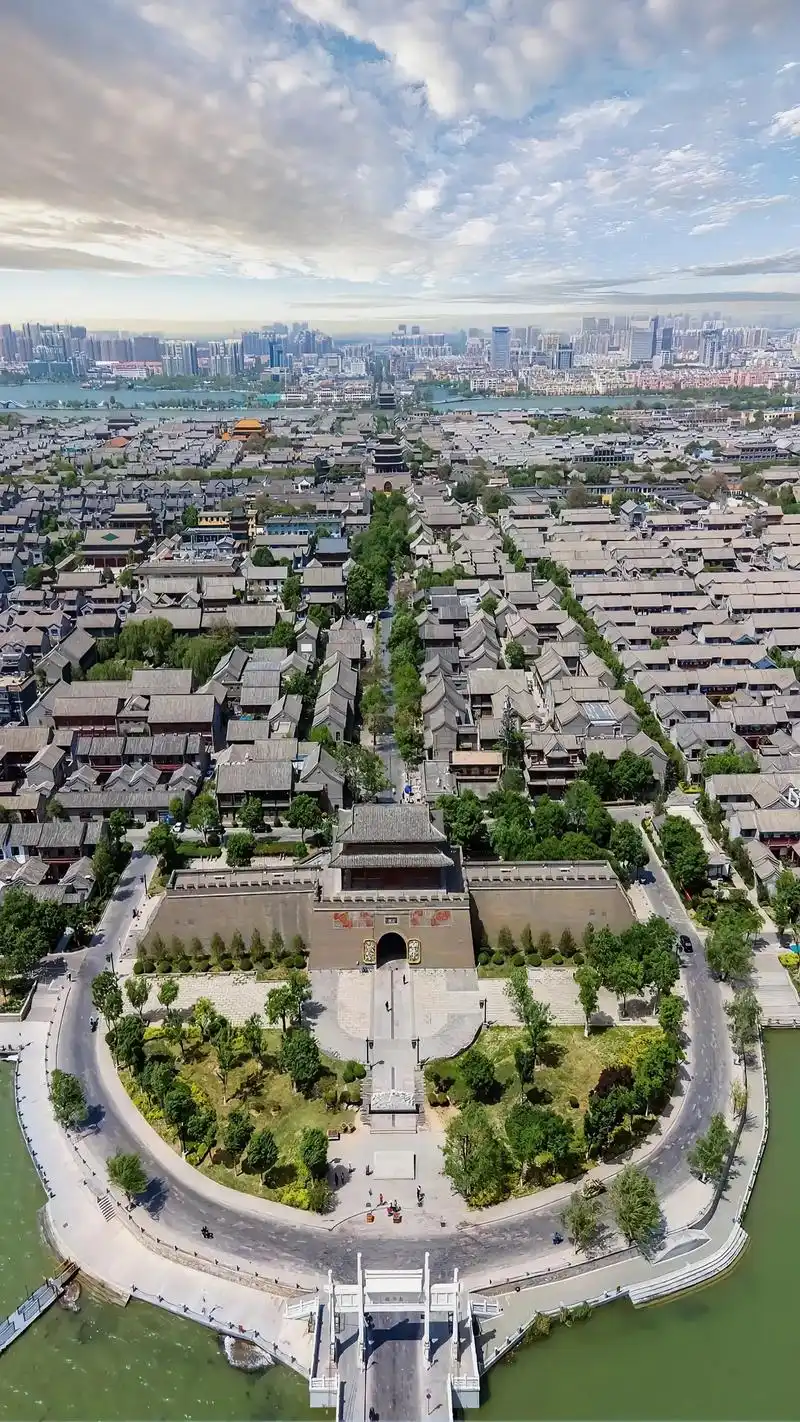 Liaocheng's watery destiny took shape in the Song Dynasty when the Grand Canal—the world's longest artificial waterway at 1,776 kilometers, comparable in ambition to Rome's aqueducts—linked northern grain supplies to the imperial capital. By the Ming and Qing eras, the city flourished as a vital transit hub where merchant ships converged from across the empire. The Shaanxi-Shanxi Guild Hall stands as testament to this commercial golden age, its 18th-century wood and stone carvings rivaling the ornamental exuberance of Baroque guild houses in Antwerp or Hamburg. Today, Liaocheng remains one of the Grand Canal's most authentic living landscapes.
Dominating the old town's skyline, Guangyue Tower has stood watch since 1374, making it a contemporary of Europe's late-medieval bell towers rising above Tuscan and Flemish towns. Rising 24 meters on its sturdy brick plinth, this four-tiered wooden pavilion was once praised as rivaling even the legendary Yellow Crane Tower of Wuhan. Its original Ming-era structural elements survive largely intact—a rarity among Chinese timber buildings, comparable to how few European cathedrals retain their medieval scaffolding. Climbing the steep interior stairs rewards visitors with panoramic views where ancient walls blend into Dongchang Lake's shimmering expanse, much like Siena viewed from its tower.
The free Grand Canal Culture Museum anchors understanding of how this waterway shaped Chinese civilization, displaying artifacts from bustling wharves to imperial grain shipments. Nearby specialized museums cover imperial Ming-Qing edicts and the region's centuries-old donkey-hide gelatin tradition, prized since the Tang Dynasty. The pedestrianized old town buzzes with intangible heritage workshops: hanfu costume photography, traditional tea ceremonies, and dough figurine crafting engage visitors in crafts that predate Europe's Renaissance guilds. Canal-era snacks still fill laneside stalls where merchants once haggled over cargo.
The prime visiting window runs April through October, when summer temperatures hover pleasantly around 26°C—cooler than Beijing's notorious heat thanks to the surrounding lake. Most museums operate on free admission, though smaller specialized venues occasionally close without notice; checking the Liaocheng Cultural Tourism Bureau website or calling 0635-8255566 beforehand prevents disappointment. Guangyue Tower intermittently undergoes maintenance closures. Visitors with mobility concerns should note that historic staircases are steep and uneven—those with elderly companions or young children should plan accordingly or admire from ground level.
Dongchang Lake deserves an entire evening. Boarding a traditional painted pleasure boat as sunset paints the sky, visitors glide past illuminated temple roofs and willows trailing in the water—a scene reminiscent of Venice's Grand Canal tour, though entirely free of admission fees. The lake's central Longdi Island hosts the "Eye of the Water City" Ferris wheel and an aquarium perfect for families. Cyclists and walkers can circumnavigate the lake on free paved paths, while nearby Jiuzhouwa Rose Garden explodes with blooms each spring, drawing photographers seeking China's answer to Provence's lavender fields.
Liaocheng offers something rare in modern China: an ungentrified water city where 600-year-old Ming walls still stand beside a working lake ecosystem. Unlike the heavily-restored water towns near Shanghai, this northern gem preserves genuine local character—grandmothers practicing tai chi at dawn, fishermen casting nets as they have for centuries, and the clatter of mahjong tiles echoing from neighborhood teahouses. For travelers seeking depth beyond Beijing's Forbidden City or Xi'an's Terracotta Warriors, Liaocheng delivers an authentic encounter with the Grand Canal's enduring legacy.
Liaocheng's watery destiny took shape in the Song Dynasty when the Grand Canal—the world's longest artificial waterway at 1,776 kilometers, comparable in ambition to Rome's aqueducts—linked northern grain supplies to the imperial capital. By the Ming and Qing eras, the city flourished as a vital transit hub where merchant ships converged from across the empire. The Shaanxi-Shanxi Guild Hall stands as testament to this commercial golden age, its 18th-century wood and stone carvings rivaling the ornamental exuberance of Baroque guild houses in Antwerp or Hamburg. Today, Liaocheng remains one of the Grand Canal's most authentic living landscapes.
Dominating the old town's skyline, Guangyue Tower has stood watch since 1374, making it a contemporary of Europe's late-medieval bell towers rising above Tuscan and Flemish towns. Rising 24 meters on its sturdy brick plinth, this four-tiered wooden pavilion was once praised as rivaling even the legendary Yellow Crane Tower of Wuhan. Its original Ming-era structural elements survive largely intact—a rarity among Chinese timber buildings, comparable to how few European cathedrals retain their medieval scaffolding. Climbing the steep interior stairs rewards visitors with panoramic views where ancient walls blend into Dongchang Lake's shimmering expanse, much like Siena viewed from its tower.
The free Grand Canal Culture Museum anchors understanding of how this waterway shaped Chinese civilization, displaying artifacts from bustling wharves to imperial grain shipments. Nearby specialized museums cover imperial Ming-Qing edicts and the region's centuries-old donkey-hide gelatin tradition, prized since the Tang Dynasty. The pedestrianized old town buzzes with intangible heritage workshops: hanfu costume photography, traditional tea ceremonies, and dough figurine crafting engage visitors in crafts that predate Europe's Renaissance guilds. Canal-era snacks still fill laneside stalls where merchants once haggled over cargo.
The prime visiting window runs April through October, when summer temperatures hover pleasantly around 26°C—cooler than Beijing's notorious heat thanks to the surrounding lake. Most museums operate on free admission, though smaller specialized venues occasionally close without notice; checking the Liaocheng Cultural Tourism Bureau website or calling 0635-8255566 beforehand prevents disappointment. Guangyue Tower intermittently undergoes maintenance closures. Visitors with mobility concerns should note that historic staircases are steep and uneven—those with elderly companions or young children should plan accordingly or admire from ground level.
Dongchang Lake deserves an entire evening. Boarding a traditional painted pleasure boat as sunset paints the sky, visitors glide past illuminated temple roofs and willows trailing in the water—a scene reminiscent of Venice's Grand Canal tour, though entirely free of admission fees. The lake's central Longdi Island hosts the "Eye of the Water City" Ferris wheel and an aquarium perfect for families. Cyclists and walkers can circumnavigate the lake on free paved paths, while nearby Jiuzhouwa Rose Garden explodes with blooms each spring, drawing photographers seeking China's answer to Provence's lavender fields.
Liaocheng offers something rare in modern China: an ungentrified water city where 600-year-old Ming walls still stand beside a working lake ecosystem. Unlike the heavily-restored water towns near Shanghai, this northern gem preserves genuine local character—grandmothers practicing tai chi at dawn, fishermen casting nets as they have for centuries, and the clatter of mahjong tiles echoing from neighborhood teahouses. For travelers seeking depth beyond Beijing's Forbidden City or Xi'an's Terracotta Warriors, Liaocheng delivers an authentic encounter with the Grand Canal's enduring legacy.