Haihui Temple
⭐ 3.20
Haihui Temple, Yanggu County, Liaocheng City, Shandong Province, China
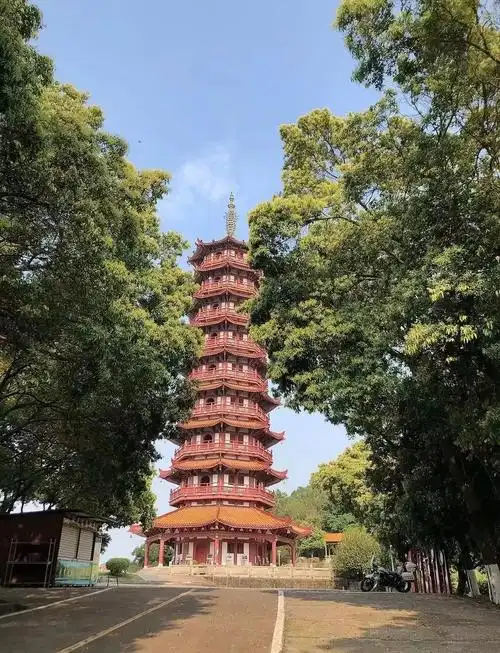 Founded in 1709 under the Kangxi Emperor—a contemporary of Louis XIV—Haihui Temple arose during the Grand Canal's commercial zenith. This 1,700-kilometer waterway carried grain, salt, and silk between Beijing and Hangzhou, serving as China's economic artery much as the Mediterranean trade routes sustained Renaissance Venice. Wealthy salt merchants pooled resources to build the original 168-hall compound; 81 survive today. The temple's genesis mirrors how medieval European guilds patronized cathedral construction, blending spiritual aspiration with mercantile pride in a single architectural statement.
The complex follows a symmetrical northern courtyard plan along a central axis, recalling the disciplined geometry of European Baroque monasteries or Spanish mission complexes. Visitors pass sequentially through the Mountain Gate, the Hall of Heavenly Kings, the Thousand Buddhas Hall, and the Main Buddha Hall, before reaching the Liu Ancestral Shrine and a Shanxi merchant guild theater. Hard-pitched brick-and-timber construction lends sober dignity. Surviving treasures include Kangxi imperial calligraphy fragments, Qing-era stone steles with intricate carvings, and a plaque inscribed by the beloved modern Buddhist master Zhao Puchu. The craftsmanship rivals the refined detail of Flemish guildhalls or Bavarian rococo chapels.
Haihui Temple represents a vanishing chapter in Chinese mercantile history. The Shanxi merchants who funded it belonged to one of imperial China's most formidable commercial networks, comparable in reach and influence to the Medici of Florence or the Hanseatic League of northern Europe. Designated a provincial heritage site in 2006, the temple stands as tangible evidence of the Grand Canal's golden age and eventual decline—offering scholars rare insight into how salt fortunes, Buddhist patronage, and regional identity converged along this UNESCO World Heritage waterway.
Located roughly 25 kilometers from Liaocheng in Yanggu County's Acheng Town, the temple sits directly on the old canal bank. No direct buses serve the site; rental cars or taxis are recommended, though travelers can take a local coach from Yanggu town to Acheng. Admission runs about 30 yuan, with complimentary entry on the first and fifteenth days of the lunar calendar. Opening hours run 8:30 AM to 6:00 PM. Plan two to three hours to walk the central axis at a contemplative pace; early morning or late afternoon light best reveals carved details and weathered brickwork.
This is not a destination for thrill-seekers but rewards those who appreciate quiet discovery. Photographers will find the theatrical stage and aged brickwork especially evocative, while historians can trace Qing commercial networks through surviving steles. Visitors should dress modestly, speak softly, and refrain from touching Buddhist statues—customs comparable to entering a European cathedral or Orthodox monastery. On lunar first and fifteenth days, expect worshippers and a hum of devotional activity. Avoid the overpriced souvenir stalls at the entrance, and bring mosquito repellent in summer months when exploring the canal-side grounds.
Founded in 1709 under the Kangxi Emperor—a contemporary of Louis XIV—Haihui Temple arose during the Grand Canal's commercial zenith. This 1,700-kilometer waterway carried grain, salt, and silk between Beijing and Hangzhou, serving as China's economic artery much as the Mediterranean trade routes sustained Renaissance Venice. Wealthy salt merchants pooled resources to build the original 168-hall compound; 81 survive today. The temple's genesis mirrors how medieval European guilds patronized cathedral construction, blending spiritual aspiration with mercantile pride in a single architectural statement.
The complex follows a symmetrical northern courtyard plan along a central axis, recalling the disciplined geometry of European Baroque monasteries or Spanish mission complexes. Visitors pass sequentially through the Mountain Gate, the Hall of Heavenly Kings, the Thousand Buddhas Hall, and the Main Buddha Hall, before reaching the Liu Ancestral Shrine and a Shanxi merchant guild theater. Hard-pitched brick-and-timber construction lends sober dignity. Surviving treasures include Kangxi imperial calligraphy fragments, Qing-era stone steles with intricate carvings, and a plaque inscribed by the beloved modern Buddhist master Zhao Puchu. The craftsmanship rivals the refined detail of Flemish guildhalls or Bavarian rococo chapels.
Haihui Temple represents a vanishing chapter in Chinese mercantile history. The Shanxi merchants who funded it belonged to one of imperial China's most formidable commercial networks, comparable in reach and influence to the Medici of Florence or the Hanseatic League of northern Europe. Designated a provincial heritage site in 2006, the temple stands as tangible evidence of the Grand Canal's golden age and eventual decline—offering scholars rare insight into how salt fortunes, Buddhist patronage, and regional identity converged along this UNESCO World Heritage waterway.
Located roughly 25 kilometers from Liaocheng in Yanggu County's Acheng Town, the temple sits directly on the old canal bank. No direct buses serve the site; rental cars or taxis are recommended, though travelers can take a local coach from Yanggu town to Acheng. Admission runs about 30 yuan, with complimentary entry on the first and fifteenth days of the lunar calendar. Opening hours run 8:30 AM to 6:00 PM. Plan two to three hours to walk the central axis at a contemplative pace; early morning or late afternoon light best reveals carved details and weathered brickwork.
This is not a destination for thrill-seekers but rewards those who appreciate quiet discovery. Photographers will find the theatrical stage and aged brickwork especially evocative, while historians can trace Qing commercial networks through surviving steles. Visitors should dress modestly, speak softly, and refrain from touching Buddhist statues—customs comparable to entering a European cathedral or Orthodox monastery. On lunar first and fifteenth days, expect worshippers and a hum of devotional activity. Avoid the overpriced souvenir stalls at the entrance, and bring mosquito repellent in summer months when exploring the canal-side grounds.