Water City Venice Scenic Area
⭐ 3.80
Water City Venice Scenic Area, Dongchangfu District, Liaocheng City, Shandong Province, China
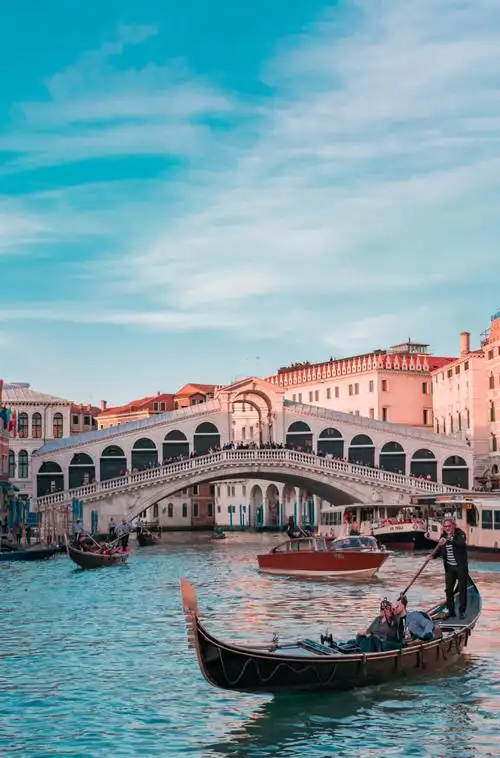 Liaocheng's "Water City" is essentially a Chinese Bruges-meets-Venice, but with a distinctly northern character. The walled town was first laid out in 992 AD during the Northern Song dynasty and rebuilt in sturdy brick during the Ming era (1372), forming a compact square fortress that echoes the medieval townscapes of York or Bruges. By the Ming and Qing dynasties, the city's fortunes rose with the Grand Canal—the 1,776-km waterway that linked Beijing to Hangzhou and functioned like China's medieval "Silk Road of the interior." Liaocheng, alongside Jining and Linqing, formed one of the canal's three great trading capitals, a hub where merchants, salt ships, and imperial tax collectors converged.
At the heart of the old town stand two architectural treasures. The Guangyue Tower, rising 24 meters in four timber-framed tiers, is one of the largest surviving wooden pavilion-towers of the Ming dynasty—comparable in ambition to Germany's half-timbered Rathaus towers but built entirely in soaring Chinese carpentry. A climb to the top rewards visitors with a panoramic sweep over terracotta rooftops, the gleaming lake, and the distant canal. Just nearby, the Shanxi-Shaanxi Guildhall, erected in the Qianlong era, is a masterpiece of Qing-era merchant architecture, often called the pinnacle of carved guildhalls in Shandong. Its intricate wood, stone, and brick reliefs—depicting dragons, phoenixes, and folk legends—rival the decorative exuberance of Sicilian Baroque or Prague's old guild houses.
Culture here runs deep. The Grand Canal, which snakes through the city, was inscribed on the UNESCO World Heritage List in 2014, placing Liaocheng on the same cultural map as Bruges or Strasbourg. Within the old town, the Canal Tax Office museum and the China Canal Culture Museum trace the bureaucratic and human story of canal commerce—how grain taxes were collected, how brokers lived, and how boats shaped daily life. The unusual layout—a small fortified square cradled by a vast inland sea—is rare in arid northern China, which is why locals proudly call it the "Water City of the North."
Practical visiting is refreshingly straightforward. Both the old town and Dongchang Lake are open public spaces with free entry; only a handful of sites, including Guangyue Tower and the Shanxi-Shaanxi Guildhall, charge modest admission (typically 20–50 RMB, with combo tickets available). Bilingual signage and audio guides cover the main highlights, though pre-booking an English-speaking guide is wise for deeper context. From Liaocheng West high-speed rail station, a taxi reaches the scenic area in about 15 minutes, and the city also offers convenient buses and shared bikes for shorter hops.
Plan a half-day to full-day visit at an unhurried pace. Begin mid-morning by ascending Guangyue Tower for the full layout of city, lake, and canal; then wander to the guildhall to study its carvings. After lunch, rent a boat or cycle the 13-km lakeside path, pausing for lotus blooms in summer or gourd-festival festivities in autumn. As evening approaches, ride the "Eye of the Water City" Ferris wheel on Longdi Island for a sunset over the lake, then stroll the illuminated old walls as the lighting show animates the historic architecture. The best season runs April through October—wear comfortable walking shoes, dress modestly inside historic halls, and bring a camera for one of northern China's most photogenic urban landscapes.
Liaocheng's "Water City" is essentially a Chinese Bruges-meets-Venice, but with a distinctly northern character. The walled town was first laid out in 992 AD during the Northern Song dynasty and rebuilt in sturdy brick during the Ming era (1372), forming a compact square fortress that echoes the medieval townscapes of York or Bruges. By the Ming and Qing dynasties, the city's fortunes rose with the Grand Canal—the 1,776-km waterway that linked Beijing to Hangzhou and functioned like China's medieval "Silk Road of the interior." Liaocheng, alongside Jining and Linqing, formed one of the canal's three great trading capitals, a hub where merchants, salt ships, and imperial tax collectors converged.
At the heart of the old town stand two architectural treasures. The Guangyue Tower, rising 24 meters in four timber-framed tiers, is one of the largest surviving wooden pavilion-towers of the Ming dynasty—comparable in ambition to Germany's half-timbered Rathaus towers but built entirely in soaring Chinese carpentry. A climb to the top rewards visitors with a panoramic sweep over terracotta rooftops, the gleaming lake, and the distant canal. Just nearby, the Shanxi-Shaanxi Guildhall, erected in the Qianlong era, is a masterpiece of Qing-era merchant architecture, often called the pinnacle of carved guildhalls in Shandong. Its intricate wood, stone, and brick reliefs—depicting dragons, phoenixes, and folk legends—rival the decorative exuberance of Sicilian Baroque or Prague's old guild houses.
Culture here runs deep. The Grand Canal, which snakes through the city, was inscribed on the UNESCO World Heritage List in 2014, placing Liaocheng on the same cultural map as Bruges or Strasbourg. Within the old town, the Canal Tax Office museum and the China Canal Culture Museum trace the bureaucratic and human story of canal commerce—how grain taxes were collected, how brokers lived, and how boats shaped daily life. The unusual layout—a small fortified square cradled by a vast inland sea—is rare in arid northern China, which is why locals proudly call it the "Water City of the North."
Practical visiting is refreshingly straightforward. Both the old town and Dongchang Lake are open public spaces with free entry; only a handful of sites, including Guangyue Tower and the Shanxi-Shaanxi Guildhall, charge modest admission (typically 20–50 RMB, with combo tickets available). Bilingual signage and audio guides cover the main highlights, though pre-booking an English-speaking guide is wise for deeper context. From Liaocheng West high-speed rail station, a taxi reaches the scenic area in about 15 minutes, and the city also offers convenient buses and shared bikes for shorter hops.
Plan a half-day to full-day visit at an unhurried pace. Begin mid-morning by ascending Guangyue Tower for the full layout of city, lake, and canal; then wander to the guildhall to study its carvings. After lunch, rent a boat or cycle the 13-km lakeside path, pausing for lotus blooms in summer or gourd-festival festivities in autumn. As evening approaches, ride the "Eye of the Water City" Ferris wheel on Longdi Island for a sunset over the lake, then stroll the illuminated old walls as the lighting show animates the historic architecture. The best season runs April through October—wear comfortable walking shoes, dress modestly inside historic halls, and bring a camera for one of northern China's most photogenic urban landscapes.