Liaocheng Ancient City
⭐ 4.00
Gucheng Street, Dongchangfu District, Liaocheng City, Shandong Province, China
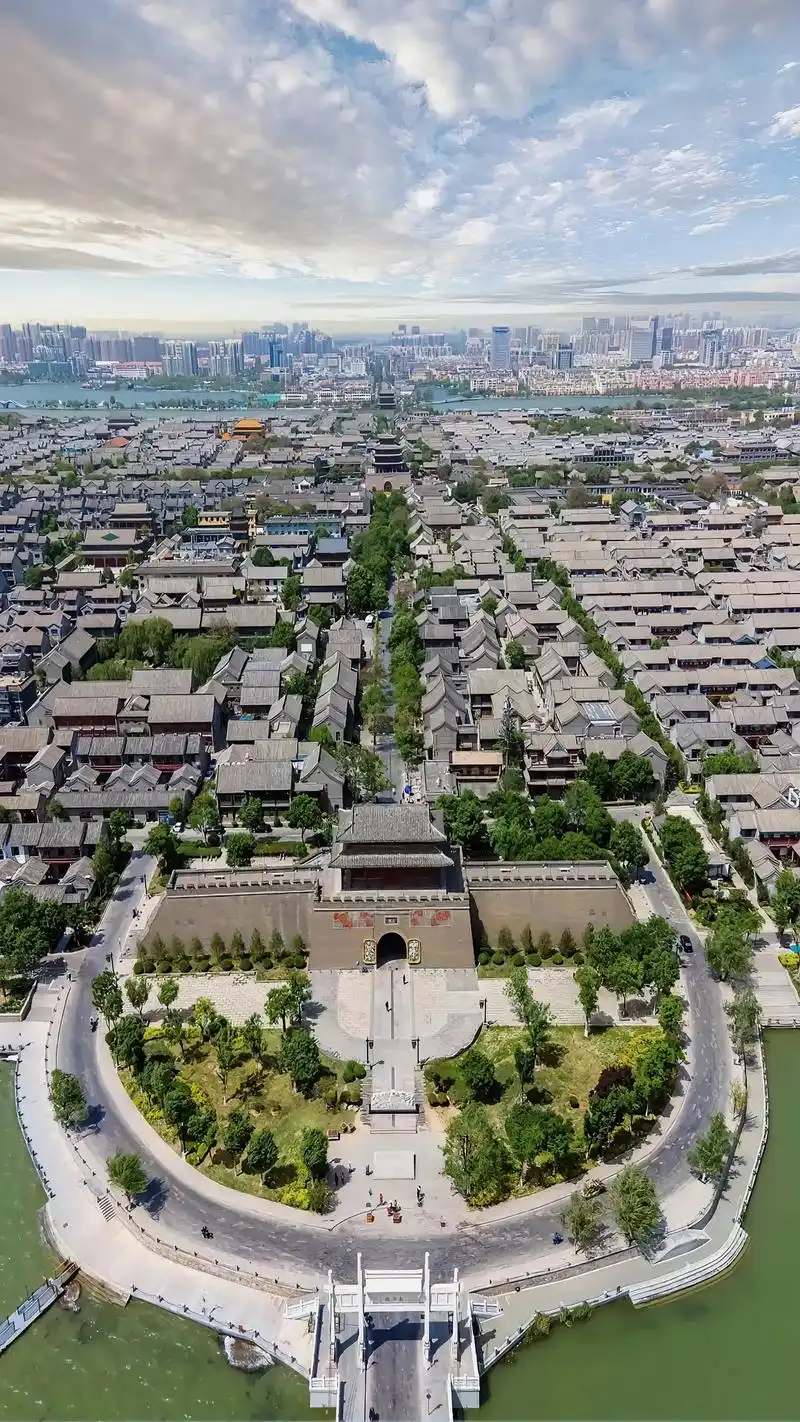 Founded in 1070 AD during the Northern Song dynasty—roughly contemporary with Norman England's completion of the Tower of London—Liaocheng Ancient City took its current fortified form in 1372 under the Ming. After a 2019–2022 restoration campaign, the chessboard-patterned streets and four ceremonial gates have been faithfully recreated in Ming-Qing style. What sets this northern Chinese town apart from European counterparts like Bruges or San Gimignano is its seamless marriage of land and water: 6.3 square kilometers of Dongchang Lake surround the square ramparts entirely, producing a setting that rivals Italy's lake-bound villages yet on a far grander scale.
Dominating the old town's center stands Guangyue Tower, a pure-timber pavilion erected in 1374 without a single nail—only interlocking mortise-and-tenon joints, recalling the ingenious craftsmanship found in Europe's surviving medieval barns and Norwegian stave churches. One of China's oldest extant wooden towers, it so impressed the Qianlong Emperor that he visited six times and composed poems on its walls. Climbing to the top rewards visitors with sweeping views over the chessboard streets below and the vast lake beyond, while original Ming and Qing calligraphic plaques inside add layers of literary and artistic heritage. The tower holds national protected-monument status.
Mirroring Guangyue Tower's cultural weight is the Shanxi-Shaanxi Guild Hall, begun in 1743 and completed over 66 years—a construction span almost matching that of St. Peter's Basilica in Rome. Built by Shanxi and Shaanxi merchants along the Grand Canal trade route, it represents the pinnacle of Chinese merchant guildhall architecture. Its celebrated "three carving treasures"—exquisite brick, wood, and stone reliefs—rival the gilded woodwork of Bavaria's Rococo churches, while the theatre's coffered caisson ceiling and Guandi Hall display artistic flourishes rarely matched outside imperial palaces. Folk opera performances occasionally animate the courtyards.
The soul of this "water city" lies in Dongchang Lake itself. A boat cruise circling the ramparts offers photographers their best shot of ancient architecture mirrored in still water, framed by the modern "Eye of the Water City" Ferris wheel on the horizon. Walking the lakeside promenade at dusk is especially rewarding, when summer breezes cool the air and illuminated towers and walls reflect in shimmering gold. Free entry to the Canal Culture Museum lets visitors explore the Grand Canal's 1,400-kilometer story through interactive scale models and artifacts, while specialized museums—Ming-Qing Imperial Edicts Museum, Ejiao Museum, and Haiyuan Pavilion—reward deeper curiosity.
The old town itself is free to enter; individual tickets to Guangyue Tower, the Shanxi-Shaanxi Guild Hall, and the Canal Tax Office run 30–40 yuan each, with combo passes between 79 and 129 yuan. Most travelers begin at the South Gate and follow a logical arc: Guangyue Tower → Cross Street → County Office → Guild Hall → Lake Cruise → Evening illuminations and Ferris wheel. June through August is ideal for combining sightseeing with outdoor performances and lake breezes, though winter and weekday daytime hours feel quieter. Don't miss regional specialties tucked into lane-side eateries: Liaocheng guata crispy pancakes, Wei family smoked chicken, and Gaotang-style tofu.
Founded in 1070 AD during the Northern Song dynasty—roughly contemporary with Norman England's completion of the Tower of London—Liaocheng Ancient City took its current fortified form in 1372 under the Ming. After a 2019–2022 restoration campaign, the chessboard-patterned streets and four ceremonial gates have been faithfully recreated in Ming-Qing style. What sets this northern Chinese town apart from European counterparts like Bruges or San Gimignano is its seamless marriage of land and water: 6.3 square kilometers of Dongchang Lake surround the square ramparts entirely, producing a setting that rivals Italy's lake-bound villages yet on a far grander scale.
Dominating the old town's center stands Guangyue Tower, a pure-timber pavilion erected in 1374 without a single nail—only interlocking mortise-and-tenon joints, recalling the ingenious craftsmanship found in Europe's surviving medieval barns and Norwegian stave churches. One of China's oldest extant wooden towers, it so impressed the Qianlong Emperor that he visited six times and composed poems on its walls. Climbing to the top rewards visitors with sweeping views over the chessboard streets below and the vast lake beyond, while original Ming and Qing calligraphic plaques inside add layers of literary and artistic heritage. The tower holds national protected-monument status.
Mirroring Guangyue Tower's cultural weight is the Shanxi-Shaanxi Guild Hall, begun in 1743 and completed over 66 years—a construction span almost matching that of St. Peter's Basilica in Rome. Built by Shanxi and Shaanxi merchants along the Grand Canal trade route, it represents the pinnacle of Chinese merchant guildhall architecture. Its celebrated "three carving treasures"—exquisite brick, wood, and stone reliefs—rival the gilded woodwork of Bavaria's Rococo churches, while the theatre's coffered caisson ceiling and Guandi Hall display artistic flourishes rarely matched outside imperial palaces. Folk opera performances occasionally animate the courtyards.
The soul of this "water city" lies in Dongchang Lake itself. A boat cruise circling the ramparts offers photographers their best shot of ancient architecture mirrored in still water, framed by the modern "Eye of the Water City" Ferris wheel on the horizon. Walking the lakeside promenade at dusk is especially rewarding, when summer breezes cool the air and illuminated towers and walls reflect in shimmering gold. Free entry to the Canal Culture Museum lets visitors explore the Grand Canal's 1,400-kilometer story through interactive scale models and artifacts, while specialized museums—Ming-Qing Imperial Edicts Museum, Ejiao Museum, and Haiyuan Pavilion—reward deeper curiosity.
The old town itself is free to enter; individual tickets to Guangyue Tower, the Shanxi-Shaanxi Guild Hall, and the Canal Tax Office run 30–40 yuan each, with combo passes between 79 and 129 yuan. Most travelers begin at the South Gate and follow a logical arc: Guangyue Tower → Cross Street → County Office → Guild Hall → Lake Cruise → Evening illuminations and Ferris wheel. June through August is ideal for combining sightseeing with outdoor performances and lake breezes, though winter and weekday daytime hours feel quieter. Don't miss regional specialties tucked into lane-side eateries: Liaocheng guata crispy pancakes, Wei family smoked chicken, and Gaotang-style tofu.