Lu Xun Memorial Park
⭐ 4.50
No. 388, Lu Xun Middle Road, Yuecheng District, Shaoxing City, Zhejiang Province, China
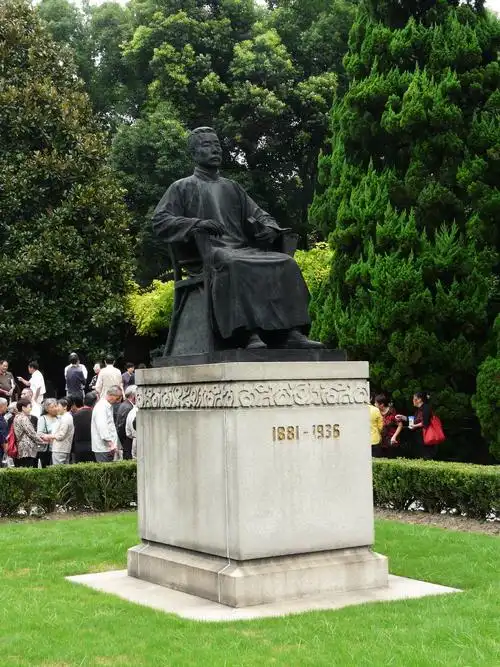 A common misconception deserves clarification: there is no "Lu Xun Mausoleum" in Shaoxing. The writer himself is buried at Lu Xun Park in Shanghai's Hongkou District, where his tomb carries the inscription "Tomb of Lu Xun" inscribed by Mao Zedong. What travelers find in Shaoxing is the birthplace he immortalized in prose, a site of arguably greater pilgrimage value for those seeking to understand the cultural wellspring of twentieth-century Chinese letters. Lu Xun's stature in world literature invites comparison to Dickens chronicling Victorian London's underbelly or Tolstoy mapping the moral landscape of imperial Russia, a writer whose biting satire and humanism reshaped an entire nation's language.
The architectural ensemble is the finest surviving example of a Qing-era Shaoxing "tai men" mansion compound, the traditional above-roof-gate residence style found throughout Jiangnan, China's fertile Yangtze Delta region. The Zhou family's Old Tai Men, Lu Xun's ancestral home, stretches impressively with carved brickwork, wooden lattice screens, and stone foundations that recall the merchant townhouses of Bruges or Edinburgh's Old Town in their enclosed, inward-turning logic. The narrower New Tai Men branch, where young Zhou Shuren (Lu Xun's given name) actually lived, retains its cramped domestic warmth, an intimate counterpoint to the ancestral grandeur next door.
The true magic lies in stepping directly into the pages of Chinese literature. The Hundred Plants Garden retains the soapberry trees, mulberries, low earthen walls, and patchy vegetation that Lu Xun described with such affection in his 1926 essay "From Hundred Plants Garden to Three-Flavor Study." The adjacent Three-Flavor Study preserves a private tutoring hall of the 1880s, complete with the scholar's desk where a young Lu Xun allegedly carved the character "早" (early) as a self-reproach for tardiness. The Memorial Hall offers context through manuscripts, photographs, and translations of his work into dozens of languages, including English editions published by Penguin and the Chinese University Press.
Visiting is refreshingly straightforward. Entry is free, but advance reservation is mandatory through the WeChat accounts of the Lu Xun Memorial or Shaoxing Cultural Tourism Group; foreign visitors register with passport details and present the original document on arrival. The site sits at 241 Lu Xun Middle Road and enjoys direct metro access via Line 1's "Lu Xun Guli" station. Hours run 8:30 to 17:00 on Mondays and extend to 21:00 (last entry 20:45) Tuesday through Sunday, allowing atmospheric evening visits when tour crowds thin and a small light show illuminates the compound. A telephone inquiry line operates at 0575-85132080.
The recommended route flows naturally from the Memorial Hall through the Three-Flavor Study, then to the Residence, the Hundred Plants Garden, and finally the Lu Xun Literary Landscape Garden, where costumed performers bring his short stories to life in miniature vignettes. Allow roughly three hours, longer if you linger over translations. Bring a translation app or rent the audio guide; modest behavior is expected inside the historic structures. Within a ten-minute walk, Shen Garden offers a graceful Song Dynasty landscape garden and the chance to experience traditional Yue opera, creating a perfect pairing of literary heritage and classical garden art that no first-time visitor to Shaoxing should miss.
A common misconception deserves clarification: there is no "Lu Xun Mausoleum" in Shaoxing. The writer himself is buried at Lu Xun Park in Shanghai's Hongkou District, where his tomb carries the inscription "Tomb of Lu Xun" inscribed by Mao Zedong. What travelers find in Shaoxing is the birthplace he immortalized in prose, a site of arguably greater pilgrimage value for those seeking to understand the cultural wellspring of twentieth-century Chinese letters. Lu Xun's stature in world literature invites comparison to Dickens chronicling Victorian London's underbelly or Tolstoy mapping the moral landscape of imperial Russia, a writer whose biting satire and humanism reshaped an entire nation's language.
The architectural ensemble is the finest surviving example of a Qing-era Shaoxing "tai men" mansion compound, the traditional above-roof-gate residence style found throughout Jiangnan, China's fertile Yangtze Delta region. The Zhou family's Old Tai Men, Lu Xun's ancestral home, stretches impressively with carved brickwork, wooden lattice screens, and stone foundations that recall the merchant townhouses of Bruges or Edinburgh's Old Town in their enclosed, inward-turning logic. The narrower New Tai Men branch, where young Zhou Shuren (Lu Xun's given name) actually lived, retains its cramped domestic warmth, an intimate counterpoint to the ancestral grandeur next door.
The true magic lies in stepping directly into the pages of Chinese literature. The Hundred Plants Garden retains the soapberry trees, mulberries, low earthen walls, and patchy vegetation that Lu Xun described with such affection in his 1926 essay "From Hundred Plants Garden to Three-Flavor Study." The adjacent Three-Flavor Study preserves a private tutoring hall of the 1880s, complete with the scholar's desk where a young Lu Xun allegedly carved the character "早" (early) as a self-reproach for tardiness. The Memorial Hall offers context through manuscripts, photographs, and translations of his work into dozens of languages, including English editions published by Penguin and the Chinese University Press.
Visiting is refreshingly straightforward. Entry is free, but advance reservation is mandatory through the WeChat accounts of the Lu Xun Memorial or Shaoxing Cultural Tourism Group; foreign visitors register with passport details and present the original document on arrival. The site sits at 241 Lu Xun Middle Road and enjoys direct metro access via Line 1's "Lu Xun Guli" station. Hours run 8:30 to 17:00 on Mondays and extend to 21:00 (last entry 20:45) Tuesday through Sunday, allowing atmospheric evening visits when tour crowds thin and a small light show illuminates the compound. A telephone inquiry line operates at 0575-85132080.
The recommended route flows naturally from the Memorial Hall through the Three-Flavor Study, then to the Residence, the Hundred Plants Garden, and finally the Lu Xun Literary Landscape Garden, where costumed performers bring his short stories to life in miniature vignettes. Allow roughly three hours, longer if you linger over translations. Bring a translation app or rent the audio guide; modest behavior is expected inside the historic structures. Within a ten-minute walk, Shen Garden offers a graceful Song Dynasty landscape garden and the chance to experience traditional Yue opera, creating a perfect pairing of literary heritage and classical garden art that no first-time visitor to Shaoxing should miss.