Keqiao Ancient Town
⭐ 3.80
Keqiao Ancient Town, Keqiao District, Shaoxing City, Zhejiang Province, China
 Spanning more than two millennia, Keqiao ranks among China's oldest continuously inhabited towns, predating many of Europe's medieval trading centers such as Bruges and Lübeck. Established during the Eastern Han dynasty (25–220 AD) and flourishing as a major canal port during the Ming and Qing dynasties, it earned the nickname "Golden Keqiao" for its commercial prosperity. The town's defining feature is its location along the Zhedong Canal, designated a UNESCO World Heritage Site in 2014 alongside China's Grand Canal. Visitors familiar with Amsterdam's 17th-century canal ring will recognize a comparable mercantile spirit, though Keqiao's waterways date back nearly a millennium earlier and remain a working artery rather than a museum piece.
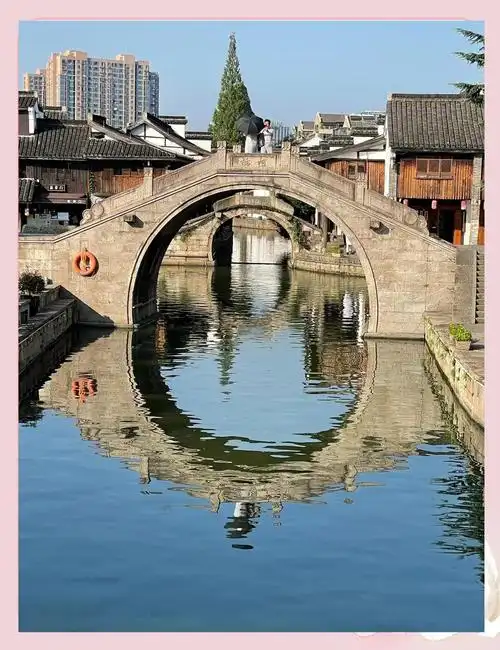
The architectural ensemble centers on the iconic "three bridges" configuration—Rongguang Bridge, Keqiao Bridge, and Yongfeng Bridge—which span converging waterways in a composition reminiscent of Italian Renaissance town squares where bridges and piazzas anchor urban life. The single-arched Rongguang Bridge, a Ming-dynasty stone structure, stands as one of the canal's most photogenic monuments, its reflection mirrored in the still waters below. Whitewashed walls, black-tiled roofs, and weathered wooden shopfronts create the textbook Jiangnan aesthetic, while unexpected cultural landmarks like the Gothic-revival Taiping Bridge Catholic Church reveal the cosmopolitan influences that filtered through this trading hub.
Cultural offerings provide depth beyond sightseeing. The Keqiao Intangible Cultural Heritage Museum traces regional craftsmanship traditions, while the Shaoxing Wangxingji Fan Museum celebrates over a century of artisanal fan-making, an art form paralleling European lacquerware traditions. At the Yuniang Workshop, visitors can participate in brewing Shaoxing's famous yellow rice wine, a fermented beverage with a documented history of over 2,500 years—making it one of the world's oldest continuously produced wines, comparable in heritage to Greek retsina or Georgian qvevri wines.
Unlike heavily commercialized water towns, Keqiao retains a lived-in authenticity where elderly residents sip tea in century-old teahouses, artisans continue traditional pickle-making at century-old shops, and the rhythms of daily life unfold alongside tourist activities. The Xiashitou Main Street buzzes with local delicacies including stinky tofu, yellow wine milk tea, and rice-wine ice pops. A 30–60 yuan wupeng boat ride through the canal offers an essential perspective, with boatmen narrating tales of merchants and scholars who shaped this waterway—much like a gondolier tour in Venice, but with distinctly Chinese river-trade history.
Practical planning is straightforward. The town itself is free and open around the clock, while museums generally operate 9:00–17:00 (some closed Mondays). Reaching Keqiao is convenient via Shaoxing Metro Line 1 to the China Light Textile City Station, followed by a short shuttle bus ride, or a 25-minute taxi from Shaoxing North high-speed rail station. Spring and autumn offer the most comfortable weather, though summer evenings are pleasant for the night shows. The evening water-mist light performance, running approximately 18:30–21:20 (extended to 21:45 on weekends), represents the day's spectacular finale—a choreography of lasers, fountains, and projected imagery that rivals Europe's grandest fountain displays at Versailles or Tivoli.
Spanning more than two millennia, Keqiao ranks among China's oldest continuously inhabited towns, predating many of Europe's medieval trading centers such as Bruges and Lübeck. Established during the Eastern Han dynasty (25–220 AD) and flourishing as a major canal port during the Ming and Qing dynasties, it earned the nickname "Golden Keqiao" for its commercial prosperity. The town's defining feature is its location along the Zhedong Canal, designated a UNESCO World Heritage Site in 2014 alongside China's Grand Canal. Visitors familiar with Amsterdam's 17th-century canal ring will recognize a comparable mercantile spirit, though Keqiao's waterways date back nearly a millennium earlier and remain a working artery rather than a museum piece.
The architectural ensemble centers on the iconic "three bridges" configuration—Rongguang Bridge, Keqiao Bridge, and Yongfeng Bridge—which span converging waterways in a composition reminiscent of Italian Renaissance town squares where bridges and piazzas anchor urban life. The single-arched Rongguang Bridge, a Ming-dynasty stone structure, stands as one of the canal's most photogenic monuments, its reflection mirrored in the still waters below. Whitewashed walls, black-tiled roofs, and weathered wooden shopfronts create the textbook Jiangnan aesthetic, while unexpected cultural landmarks like the Gothic-revival Taiping Bridge Catholic Church reveal the cosmopolitan influences that filtered through this trading hub.
Cultural offerings provide depth beyond sightseeing. The Keqiao Intangible Cultural Heritage Museum traces regional craftsmanship traditions, while the Shaoxing Wangxingji Fan Museum celebrates over a century of artisanal fan-making, an art form paralleling European lacquerware traditions. At the Yuniang Workshop, visitors can participate in brewing Shaoxing's famous yellow rice wine, a fermented beverage with a documented history of over 2,500 years—making it one of the world's oldest continuously produced wines, comparable in heritage to Greek retsina or Georgian qvevri wines.
Unlike heavily commercialized water towns, Keqiao retains a lived-in authenticity where elderly residents sip tea in century-old teahouses, artisans continue traditional pickle-making at century-old shops, and the rhythms of daily life unfold alongside tourist activities. The Xiashitou Main Street buzzes with local delicacies including stinky tofu, yellow wine milk tea, and rice-wine ice pops. A 30–60 yuan wupeng boat ride through the canal offers an essential perspective, with boatmen narrating tales of merchants and scholars who shaped this waterway—much like a gondolier tour in Venice, but with distinctly Chinese river-trade history.
Practical planning is straightforward. The town itself is free and open around the clock, while museums generally operate 9:00–17:00 (some closed Mondays). Reaching Keqiao is convenient via Shaoxing Metro Line 1 to the China Light Textile City Station, followed by a short shuttle bus ride, or a 25-minute taxi from Shaoxing North high-speed rail station. Spring and autumn offer the most comfortable weather, though summer evenings are pleasant for the night shows. The evening water-mist light performance, running approximately 18:30–21:20 (extended to 21:45 on weekends), represents the day's spectacular finale—a choreography of lasers, fountains, and projected imagery that rivals Europe's grandest fountain displays at Versailles or Tivoli.